
Do We Need Another Hero?
Hero stories don't fit society they way they used to, and that changes how they are told

Do we need another hero? Tina Turner didn’t think so.
But a lot of people disagree. They ask for heroes and stories of heroes. Which is a bit of a puzzle, isn’t it? Why should they need to ask? Stories of heroes number as the fish in the sea, surely? And yet there is this angst, this yearning, for hero stories, as if they had indeed gone away. How can we account for this? I think it is because hero stories have got out of step with the times, and no one quite seems to know what to do about it.
How did hero stories get out of step with the times? Heroism is a response to peril. The hero is the one who runs toward the fire. How much we value the hero depends on how much we fear the fire. And we don’t fear the fire the way we used to. Our circumstances have changed, and our perils are not the perils of old. To illustrate the point, let me divide perils into four types:
the perils of want
the perils of injury
the perils of the psyche
the perils of the soul
The standard hero tale deals mostly with the perils of injury and want. The peril of injury comes from dangerous work, dangerous travel, dangerous illness, and, of course, physical conflict and war. The peril of want comes from the lack of sufficient resources to sustain life, the lack of food, water, heat, shelter, and medicines. The classic hero story is that of the hero who undertakes the perils of injury to secure their people from the perils of want. The perils of the psyche and of the soul may enter into the story too, but the foundation and the source of action are the perils of want and injury.
For most of human existence, people have lived with the daily perils of want and injury. Their work was dangerous, their food supply perilous, and the threat of war, violence, and disease hung over them constantly. Half their children died before they reached adulthood, and deaths in middle life were common. Modern life has largely banished the perils of want and injury. Workplace safety is paramount in most industries, food is plentiful and cheap, the threat of war is distant, crime is down, and the health care system, much as we complain about it, it a marvel compared to that of every other age, to the point where average life expectancy has about doubled over the last hundred and fifty years, and virtually every child born today can expect to live to be 80.
The perils of want and injury do still exist, of course, but they are not the first or dominant concerns of most modern people. This is unquestionably a good thing. Whenever I hear anyone wax nostalgic about the life of the past, I want to send them to a nineteenth-century dentist or have them bled for fever by an eighteenth-century surgeon with a dirty scalpel. Anyone who wishes that they lived in the Middle Ages is just not paying attention. Living in a world of safety and plenty is an unprecedented boon that we should be grateful for every day. But it also means that modern people feel little need for heroes in the traditional mold. Why would we feel the need for people to stand between us and perils we no longer fear? Why would we make it a priority to prepare young men to be heroic when we feel no need for heroes?
Preparing young men to be heroes was among the first priorities of most pre-modern societies. It is what gave rise to the grand traditions of heroic literature. It is why so many young men flocked to join up to fight in the trenches in World War I. They had been brought up to be heroes. This was their chance to do their part.
It is also why so many young women gave white feathers to any apparently healthy young man not in uniform. They detested cowardice because they had grown up to depend on the courage of the men they married. The men were primed to run towards the fire, and the women were primed to cheer them on. Not because they were mad or wicked, but because they had been brought up to fear the fire.
All of this behavior seems terribly strange and cruel to us now. When a show like Downton Abbey shows young women handing white feathers to young men to shame them for cowardice, our protagonists are aghast. They have to be, because the producers need us to be sympathetic with them. In real life, though, they would have been just as likely to hand out white feathers themselves.
Our revulsion at this practice is not because we are more moral than the women who did it, but because we feel so much safer. Just as we turned against slavery once we had machines to do the work, and immediately found it monstrous, so we have turned against the cult of heroism now that the perils of want and injury feel so far away, and immediately found that cult monstrous as well.
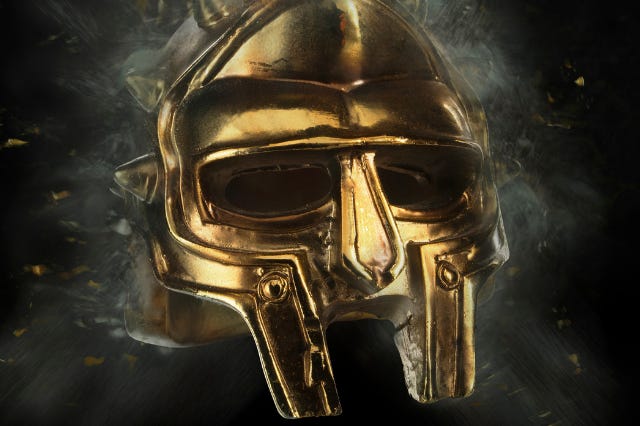
This retreat from heroism has had a profound effect on the lives and psyches of young men. You may choose to believe that the heroic impulse is a fundamental evolutionary trait of men, or you may choose to believe that it is merely an outdated cultural prejudice — toxic masculinity — that should be made to fade and die, but whichever it is, the heroic impulse is still a part of the psychological makeup of men and boys. It just isn’t rewarded and encouraged the way it used to be.
But the retreat from heroism, I would submit, has also had a profound effect on young women. Women have seldom been called to the kind of heroism that gets mentioned in dispatches (though on occasion they have). They are seldom called to run towards the fire. Rather, they are the reason that the men run towards the fire. Women have a heroism of a different kind, patient rather than bold. But women have traditionally needed their men to be heroes because it was the heroic deeds of men that secured them and their children from the perils of injury and want.
My mother was a coal miner’s daughter. In a miner’s household in the 1920s, men went out each morning to jobs that were backbreakingly hard and hideously dangerous. They were everyday heroes, and they faced terrible labour and danger every day to feed their families. They came home at the end of the day filthy with coal dust and aching to their bones. Their wives and their daughters relied upon that heroism and recognized it and honored it. Miners’ wives and daughters and sisters looked after the men when they came home because the men had given their all and needed that care. We would not wish jobs like that on anyone today. There are still dangerous jobs, of course, but not so many and not so dangerous. The heroism of the men in those days gave shape and purpose to the unsung but no less real heroism of the women who both relied upon and cared for the men and, of course, for their children.
The profound mutual dependence that bound families together in those days, and earlier, has lost much of its force as the perils of want and injury have receded. We depend on other individuals less and less to keep us from want and injury. Dependence is now regarded by many as a curse to be escaped rather than a blessing to be cherished and cultivated. Even people who still think heroism admirable don’t have the same visceral sense of dependence on heroic action that past generations did. They admire it more as an abstract virtue than an immediate practical need.
Heroism is inextricably bound up with mutual dependence. The hero is the one on whom others depend, and therefore the one towards whom they have an obligation. But move the perils of want and injury back far enough, and dependency can start to feel like more of a burden than a source of safety. Indeed, dependency starts to seem more like a source of peril than a defence against it, so much so that women are routinely advised never to depend on a man. Men, after all, are not always dependable, and the modern disdain for heroism does not dispose them to become so. It is now thought better to depend on no one and permit no one to depend on you.
In truth, of course, we are more dependent than we have ever been. We can do less for ourselves than any generation before us. We would starve if the lights were to go out for any great period of time. But our dependence is on systems, institutions, and governments, not individual people. We can live independent lives without the need for heroes because of the vast network of systems and institutions that isolate us so effectively from injury and want.
Even today’s hero stories are based on institutions. We tell stories of cops and doctors who work in teams in institutional settings, assuring us of the reliability of these institutions, and thus affirming our lack of need for individual heroes to depend on. The defining virtue of these institutional heroes is not courage but competence. They are technicians, not heroes.
Ah, you are probably saying, but there are also stories of individual heroes working outside of institutions, and often in opposition to them, fighting back when they overreach or filling in the gaps when they fail. And that is true. But notice how different this kind of hero is from the heroes of old. They live in the shadows, on the edges of society, often keeping their identities hidden. They are not, like the heroes of old, at the pinnacle of their society, its kings and knights and princes. They are its outcasts.
We might well see this kind of hero story as the old, inbred heroic impulse breaking through and protesting society’s ingratitude and indifference towards it. The institutions won’t save you, it protests. There are more perils than you know of, and you still need heroes to save you, even if you never know what dangers they have saved you from.
This is a trope that occurs over and over again in heroic stories today. The Slayer saves you from the vampires and the daemons on a weekly basis, and from the apocalypse once a year, but you know nothing of the danger. James Bond prevents madmen from blowing up the world on a three-year cycle, but the whole thing is kept from the public. See, world, these stories say, you do need heroes after all, and you should at least say thank you now and then.
Which leads me to ask, is the longing for stories about heroes not really about scarcity of stories at all, but about a longing for stories of heroes, and for heroism itself, to regain the social status they once had but no longer enjoy? Is the desire for hero stories really a desire for a society that values heroes and heroism the way it once did? Is the hope that one more hero tale will wake the world up to its need for heroes?
Could we really be one good hero story away from a renaissance of heroic virtues and public approbation of heroes? In the past, boys were raised to be heroic because society had a genuine and urgent need for heroic action. Today, heroism is widely regarded as an outdated virtue. This changes the moral context in which we encourage boys to be heroes. Even if you instill heroic virtues in boys, you cannot create men like the men of old, because all men are shaped by their times. Instead of creating men who will stand at the center of society, you will create oddballs who stand on its fringes. Those oddballs may be better men than those who stand at the center, but by existing on the fringes, they do not become like the men of old who stood at the center.
In many parts of the world, men turn out on weekends dressed in period costumes to reenact battles of the past. Few of them will ever have been real soldiers or fought in real battles. They clothe themselves in the virtues of old, but in doing so, they place themselves not at the center but on the fringes. The men won’t cheer, the boys won’t shout, the ladies, they will not turn out, when Johnny comes driving home in his Subaru after the hundredth reenactment of Gettysburg.
The same is true of the eccentric back-to-the-landers. They may be living and farming like ordinary men of old (though not really), but unlike them, they do not stand at the center of the economy and society. They do not stand between the people and starvation. They are cranks and oddballs on the fringes. They define themselves by their rejection of society, not by their participation in it or contribution to it.
Modern hero stories tend to reflect this sense of isolation and rejection. The military heroes of men’s fiction tend to be outcasts and misfits. Richard Sharpe is a guttersnipe constantly in conflict with the toffs in Wellington’s officer corps. The A-Team is on the lam from the military police. This too seems to reflect the sense of exiled heroism that seems to afflict men in the modern age.
This may perhaps help account for one of the strangest shifts in reader behavior in modern times, the shift from reading about other people to identifying with the protagonist of a story as an avatar of the self. In a world that needs and welcomes heroes, it makes sense to read about other heroes, heroes you hope to emulate in real life when, as you fully expect, your heroism will be called upon.
But someone of heroic inclination living in a world with no interest in heroism, and considerable distrust of it, has no expectation that their heroism will ever be called upon in real life. A story becomes the only place to act out their desire to perform heroic deeds. It is no longer enough to watch and admire the hero; one must become the hero, for the story is the only place you will find any outlet for your desire for heroic action.
But acting out the heroic urge by identifying with the hero of a story, like dressing up in blue and grey and discharging blanks at your buddies across the field, does not deliver the key reward offered to the heroes of old: social approbation. With the external rewards of real heroism removed, the reader seeks rewards in the story itself, just as they seek an outlet for action in the story itself. And this means that the form of the hero story has to change so as to provide its own rewards and satisfactions.
Modern heroic literature is a literature of superheroes and fantasy knights and warriors. So many modern heroes are in some way super. That is, they have powers that ordinary people do not. Even the heroes who are not nominally superheroes routinely perform feats beyond the skill or endurance of mortal men. They may do deeds that protect others from harm, but they don’t take the same risk doing it as the heroes of old because their superpowers make them both more capable and less vulnerable. They express less the acceptance that it is the ordinary lot of men to be called upon to make heroic sacrifice, and more a desire for power. It is not without reason that comic books used to feature ads that promised 98-pound weaklings that they could become big and strong and punch out the bully who kicked sand in their face.
In some sense, of course, boys reading heroic tales have always dreamed of being big and strong. But they were merely looking forward to a time when they would become big and strong simply by growing up. Theirs was not a desire to be bigger and stronger than other men, but to be as big and as strong as other men. They knew that once they had grown big and strong like other men, heroic action would be demanded of them as it was demanded of other men. It was not primarily a desire for power that motivated them, but a desire for the capacity to stand and do their duty as men. It was courage, above all, that was asked of them. It was courage, above all, that they aspired to. We might wonder today why young men flocked in such numbers to sign up to fight in the trenches in World War I, why time and time again they went over the top to be slaughtered in such numbers. It was because it was paramount to them, the essential core of their characters, drummed into them by countless tales of heroism, to show their courage. Courage even unto death.
Young men brought up on tales of superheroes demonstrate no such character. Courage is not their core value, nor the core value of their heroes. For them, the core values are power and competence. And yet somehow these values do not seem to inspire them to achieve either power or competence in their own lives. Their power and competence remain in the realm of fantasy. They do not go out into a waiting world to show what they have learned to be, but retreat into the world of stories and games to act out the things that the real world neither permits them to be nor admires them for being. Hero stories play a very different role in their lives, and the most notable difference is that they do not turn them into heroes.
Even if they did acquire the courage of the young men of former generations, the courage of the young men who flocked to the recruiting stations when their country was at war, would they be accepted, revered, and rewarded for it as were the young men of old? Very obviously, they would not. Society does not feel itself to have need of such courage anymore. Within families and communities of military, police, or firefighters, perhaps they will find that same approbation for their courage, but hardly in the world at large.
The drive for the power and competence of the superhero, then, comes from a very different place than the drive for courage that animated young men in earlier centuries. If showing your courage was the key to social acceptance in the past, today obtaining power and competence is a way to thumb your nose at society, not a way to gain membership in it. This sense of isolation from society occurs in many superhero tales. The hero is the outcast, the misunderstood, the lonely. Society turns its back on its heroes as once it turned its back on its cowards.
Another type of reward offered by a modern hero story is the erotic. The implied promise of the Charles Atlas ads in the old comic books was that once you had socked the sand-kicking bully in the jaw, you would then enjoy the favors of the girl in the swimsuit lying beside you on the beach blanket. Getting the girl, or rather, a whole succession of girls, is a regular feature of modern heroes. James Bond, Richard Sharpe, and Jack Aubrey are all philandering ladies’ men. It is the exiled-heroes version of the returning hero marrying the king’s fairest daughter, except, as exiles, they cannot marry, or not well, and must therefore have a girl in every town. The heroic chastity of a Sir Gawain is nowhere to be found in a modern adventure story.
The erotic appeal of the hero is not exclusive to the modern age, of course. The heroic performance of dangerous labours and military deeds is undertaken, after all, to defend hearth and home. It is by prowess in these things that the male communicates to the female that he is a suitable father for her children. And so it follows that the greatest hero gets to marry the fairest maiden, for who else is the fairest maiden going to choose for her consort but the greatest hero?
Lancelot was a ladies’ man as well as a superlative knight. The phrase “None but the brave deserve the fair” goes back to a 1697 poem by John Dryden. Much of the modern fantasy and hero genres can trace their roots back to the medieval courtly love tradition, in which the knight’s lady love was, by convention, not his lady wife. The idea that the bravest warriors deserve the fairest maidens is ancient. And yes, as with Bond, Sharpe, and Aubrey, the erotic reward for heroism does not always involve marriage. This probably explains the rapid growth of romantasy as a genre today.
The erotic aspect of the hero story has never been absent, therefore, but as the social utility of heroism fades, the erotic appeal of the hero comes ever more to the fore. To endow a hero with erotic appeal, courage is not enough. Strength, power, and competence are much more erotically charged properties. Superheroes thus exaggerate not only the strength, power, and competence of their heroes, they play up the physical attributes of both men and women to enhance their erotic appeal. This is the reason that superhero costumes are so tight-fitting and feature so many prominent bulges.
There is, of course, a sizable body of opinion that rejects that kind of hero too. “None but the brave deserve the fair” lacks the egalitarian flavor of the age, while the erotic element is anathema to several parties, including ones that are more often at each other’s throats than in agreement. Here then we find yet another of the rewards of heroism condemned as inappropriate for the modern age.
The literary world, meanwhile, has devoted itself almost exclusively to the perils of the psyche. We might trace this turn as far back as the rise of realism, which turned its back on the romance of the old hero tale and its face towards the world of quotidian angst. Today, we are subjected to an almost unending stream of dreary trauma books in which every character is defined, more than anything else, by their particular variety of dysfunction.
Where does this leave us, and where does it leave the hero story? It strikes me that it may be fair to ask if our story sense itself, the part of our brain that craves stories in order to make us wise and brave, may be primed by our evolution to want stories of the heroes of the old kind who protected us from want and injury. Perhaps this is where our ambivalence about hero stories comes from. We crave them, but then do not quite know what to do with them, how to apply the wisdom and bravery they could perhaps develop in us to a world that does not seem to require them so much, or in the same way, as it did in the millennia through which evolution wired our brains for story.
I noted recently the difference between the hero story and the pilgrim tale. I would like to be able to write a hero story. Despite our social angst over them, they still sell books, and I would like to sell more books. But somehow I can’t quite find the end of the string when it comes to hero stories. All my novels are much more in the mold of the pilgrim tale, the tale of the transgressor seeking redemption.
The pilgrim tale is, of course, a story of the peril of the soul. You may take soul in any way you like here, but the point remains the same. If the story of the peril of the psyche frames the question of what sort of person I am as a matter of psychiatric categorization, the story of the peril of the soul frames it as a moral question. Am I the sort of person who pays the price to do the right thing? It is a question that, like in the hero stories of old, comes down to a question of courage.
Writing the story of the peril of the soul without being moralistic or preachy is no easy task. The tale of the peril of the soul, after all, is the tale of a sinner, and our modern habit of identifying with the protagonist means that the reader of a pilgrim tale is asked to identify with a sinner. The very people who might find the idea of reading and writing pilgrim tales attractive are the ones who may feel most uncomfortable identifying with a protagonist who is a sinner.
We do not lack for great examples of pilgrim tales or of sinful protagonists. From Macbeth, Hamlet, and King Lear to Brideshead Revisited and The Power and the Glory, there is a rich vein of such stories in the Western tradition. Could this perhaps be the tradition, rather than that of the hero story, that we should be seeking to build upon today?
This is my question then, and I mean it genuinely as a question, for I am not ready yet to nail my colors to the mast of either answer. Is it still important to try to tell hero stories seriously, not as quasi-erotic entertainments but as genuine aids to character development, or is the pilgrim tale perhaps the more apt response to the spirit of the age? What do you think? Comment below.
This article raises some fascinating points about the essential role of heroes in earlier generations vs. today.
It made me think of how the musical "Epic" approaches the hero story of Odysseus through a modern, "post-hero" lens. "Epic" largely concerns itself with the moral quandaries of mercy vs. ruthlessness, of how a life of violently fighting against his foes changes and scars Odysseus and his crew. But the original Homeric poem doesn't tackle any of these modern moral questions. Back then, it was a fundamental understanding of society that the world was full of people and monsters and elements trying to kill you, that men were supposed to be warriors, and that warriors fought and killed and tricked and outwitted their opponents, and were to be lauded and celebrated for their courage and heroics.
I'm very grateful that we no longer live in a world requiring every man to regularly fight to defend his town and village. But we do need a return to celebrating and lauding heroic qualities.
Definitely an interesting question. I think I tend to agree that society needs heroes, but realistically speaking, heroes as we use them in fiction don't truly exist. Or maybe rarely exist. Real life is more complicated than there is good and there is bad. I've not seen much, if any, of that show "The Boys", but it is my understanding that Homelander is beloved of the masses and seen as a hero when in reality he is the opposite.
Life is a lot like that.
This is probably the historian in me, but nuance matters. I can say that Wyatt Earp was heroic in that is avenged his brother's death at the hands of the Clantons, and I can also say that he was a cheater at cards, a bad husband, and murder working outside the law. Bad people CAN do good things, and Good people CAN do bad things. Idolizing real and complex people as heroes leads to...issues...
In FICTION, however, we have a different story (see what I did there?).
I do believe there is a dire need to return to the idea of heroes in fiction, and I actually think we are seeing that movement. Fiction can provide ideals to strive for while being realistically complex or unreaslistically less complex. As a teen, fiction went throught this "Dark and Gritty" phase which produced the best Batman movie ever made, but little else. I think maybe we've seen the death of Dark and Gritty with Snyder's DC movies being laid to rest.
There is also the whole "world saving" problem, in that I personally don't care at all about saving the world in fiction anymore. Likely a byproduct of reading far too many Pulp short stories, I NEED my stories to have lower, more personal stakes. I need heroics I can relate to.
I just finished a story called "The Cure" by JD Newcom in a 1930 issue of Adventure (writing a post about it as we speak), and while the main character does accomplish something martially heroic, he also humbles himself in the process. I will likely never fight a pitched battle against Berbers on horseback, but I can recognize and strive toward the heroic ideal of being humble and not exaggerating my accomplishments.
The real world will forever be complicated and will likely grow more-so. If approaching individuals honestly and thoroughly, the idea of a true "Hero" living on planet Earth right now likley has no exemplar. If it does, we don't know who they are. I'd much rather my fiction provide tanglible, relateable examples of heroics (packaged in two-fisted adventure) that I can strive for in my life. That's where fiction excels.
This has grown long and is rambling, so I'll stop. Hopefully my point comes across.